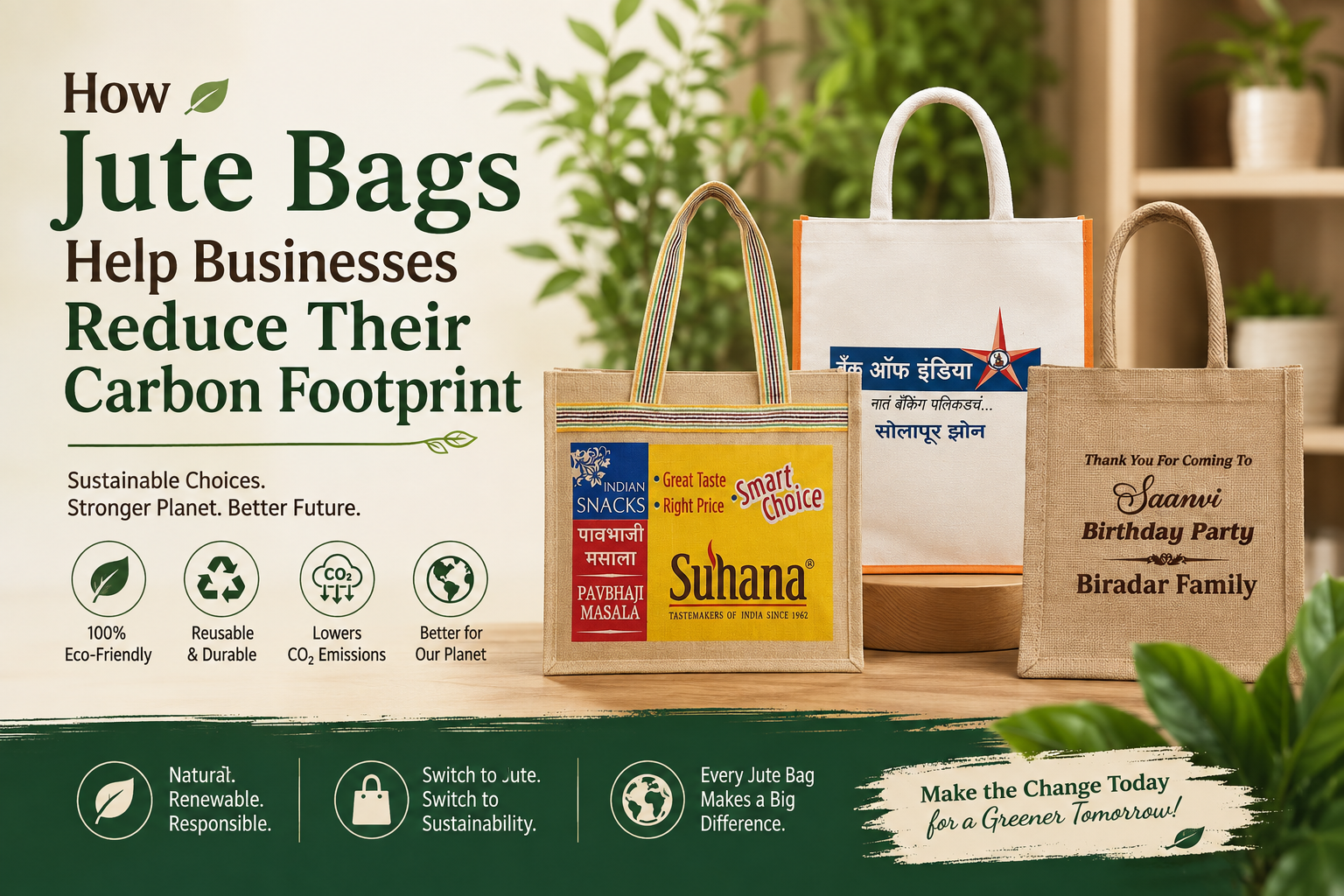
Imagine walking into a local grocery store on a busy Saturday morning. At the checkout counter, a customer finishes shopping and reaches for a reusable jute bag instead of accepting a plastic bag. It may seem like a small decision—almost insignificant in the grand scheme of things—but that single choice represents a much bigger shift happening around the world.
Now imagine thousands of customers making that same choice every day. Then millions.
This simple act has become part of a global movement toward sustainability, where businesses are taking responsibility for reducing their environmental impact. From boutique retailers and supermarkets to corporate offices and event organizers, companies are replacing disposable plastic packaging with eco-friendly alternatives that align with modern consumer expectations.
One of the most impactful alternatives is the humble jute bag.
Made from one of the world’s most sustainable natural fibers, jute bags offer businesses an opportunity to reduce waste, lower carbon emissions, strengthen their brand image, and contribute to a greener future.
In this guide, we’ll explore exactly how jute bags help businesses reduce their carbon footprint and why they have become an essential part of sustainable business practices.
Table of Contents
ToggleUnderstanding Carbon Footprint
Before discussing jute bags, it’s important to understand what a carbon footprint actually means.
A carbon footprint refers to the total amount of greenhouse gases—primarily carbon dioxide (CO₂)—released into the atmosphere because of an individual, product, or business activity.
Businesses generate carbon emissions through various activities, including:
- Manufacturing
- Transportation
- Packaging
- Energy consumption
- Waste generation
- Disposal of products
Packaging is often overlooked, yet it contributes significantly to environmental pollution, especially when businesses rely on single-use plastics.
Switching to sustainable packaging materials like jute can substantially reduce these emissions over time.
Why Jute Is Considered an Eco-Friendly Material
Jute is often called the “Golden Fiber” because of its natural color, strength, and environmental benefits.
Unlike synthetic materials, jute is:
- 100% biodegradable
- Compostable
- Renewable
- Naturally grown
- Recyclable
- Durable
Jute plants mature within just four to six months and require very little irrigation or chemical fertilizers compared to many other commercial crops.
Even better, jute plants absorb large amounts of carbon dioxide during their growth cycle while releasing oxygen into the atmosphere.
This makes jute one of the most environmentally friendly fibers available today.
1. Jute Bags Reduce Plastic Waste
One of the biggest contributors to global pollution is single-use plastic bags.
Plastic bags often:
- End up in oceans
- Pollute rivers
- Harm wildlife
- Take hundreds of years to decompose
- Produce greenhouse gases during manufacturing
Every reusable jute bag can replace hundreds—and often thousands—of plastic bags throughout its lifespan.
When businesses switch to jute shopping bags or promotional bags, they dramatically reduce the demand for disposable plastics.
This directly lowers their environmental impact.
2. Jute Plants Naturally Absorb Carbon Dioxide
One remarkable feature of jute is that it actively contributes to reducing atmospheric carbon.
During cultivation, jute plants absorb significant amounts of carbon dioxide while producing oxygen.
Compared to petroleum-based materials used in plastic production, jute cultivation actually helps offset carbon emissions.
This means businesses using jute products indirectly support a renewable agricultural system rather than fossil fuel-dependent manufacturing.
3. Lower Energy Consumption During Manufacturing
Plastic manufacturing requires:
- Petroleum extraction
- Chemical processing
- High-temperature production
- Energy-intensive machinery
Each step produces greenhouse gas emissions.
Jute processing, on the other hand, is considerably less energy-intensive.
Since jute is a natural fiber, much of the manufacturing process involves mechanical processing rather than complex chemical production.
This translates into lower overall energy consumption and fewer carbon emissions.
4. Reusable Bags Mean Less Production
One disposable plastic bag serves a customer once.
A premium-quality jute bag can last for years.
This durability creates a ripple effect.
Instead of manufacturing hundreds of plastic bags for repeated shopping trips, one reusable jute bag can handle the same workload.
Less production means:
- Lower raw material consumption
- Reduced factory emissions
- Less transportation
- Lower packaging waste
Businesses benefit while the environment gains long-term advantages.
5. Reduced Landfill Waste
Landfills are a major source of methane—a greenhouse gas far more potent than carbon dioxide.
Plastic bags remain in landfills for centuries.
Jute bags naturally decompose without leaving harmful microplastics behind.
Even after years of use, discarded jute bags break down naturally and return to the soil.
This significantly reduces landfill accumulation and associated greenhouse gas emissions.
6. Supports Sustainable Agriculture
Jute farming supports environmentally responsible agriculture.
Compared to other industrial crops, jute requires:
- Less irrigation
- Fewer pesticides
- Minimal fertilizers
- Natural rainfall in many growing regions
Healthy agricultural practices help preserve soil quality and reduce the environmental burden associated with intensive farming.
Businesses choosing jute indirectly encourage sustainable farming communities.
7. Encourages a Circular Economy
Today’s sustainability efforts emphasize creating products that stay in use longer and generate minimal waste.
Jute perfectly aligns with this circular economy model.
After serving its purpose as a shopping or promotional bag, it can often be:
- Reused
- Repurposed
- Recycled
- Composted
This extends the product’s lifecycle and reduces the need for continuous resource extraction.
8. Reduces Brand Carbon Footprint
Consumers increasingly evaluate brands based on their environmental practices.
Businesses adopting eco-friendly packaging often experience benefits beyond sustainability.
These include:
- Improved brand perception
- Stronger customer loyalty
- Better ESG performance
- Enhanced corporate responsibility initiatives
Using reusable jute bags becomes a visible commitment to reducing environmental impact.
Customers appreciate brands that make responsible choices.
9. Ideal for Sustainable Promotional Campaigns
Businesses spend significant budgets on promotional merchandise.
Plastic promotional bags often end up discarded after a single use.
Jute bags provide a smarter alternative.
Custom-printed jute bags continue promoting your brand long after an event has ended.
Whether used for trade shows, exhibitions, conferences, or retail promotions, every reused bag becomes a walking advertisement while preventing additional disposable bag consumption.
10. Helps Meet Sustainability Goals
Many organizations now have formal sustainability targets.
These may include:
- Reducing plastic usage
- Lowering packaging waste
- Improving ESG reporting
- Supporting green procurement
- Meeting customer sustainability expectations
Switching to jute bags is a practical step toward achieving these goals without compromising functionality or aesthetics.
Industries Successfully Using Jute Bags
Businesses across various sectors are embracing jute bags.
Popular industries include:
- Retail stores
- Grocery chains
- Fashion brands
- Organic food companies
- Corporate gifting companies
- Hotels and resorts
- Event management firms
- Educational institutions
- NGOs
- Luxury boutiques
Each of these industries benefits from combining sustainability with premium brand presentation.
Why Customers Prefer Businesses Using Jute Bags
Modern consumers are becoming increasingly environmentally conscious.
Studies consistently show that people prefer brands demonstrating genuine sustainability efforts.
A well-designed jute bag communicates:
- Environmental responsibility
- Premium quality
- Long-term value
- Brand authenticity
Rather than viewing packaging as waste, customers often reuse jute bags for shopping, travel, office use, or storage.
This repeated use continuously reinforces brand visibility.
The Long-Term Business Benefits
Reducing a carbon footprint isn’t just about protecting the environment.
It also creates long-term business advantages.
Companies that adopt sustainable packaging often enjoy:
- Higher customer trust
- Improved brand reputation
- Increased repeat purchases
- Better marketing opportunities
- Stronger differentiation from competitors
- Greater alignment with global sustainability initiatives
As governments introduce stricter environmental regulations and consumers demand greener alternatives, businesses that adopt eco-friendly solutions today position themselves for future success.
Conclusion
Reducing a business’s carbon footprint doesn’t always require massive operational changes. Sometimes, meaningful progress begins with a simple switch in everyday packaging choices.
Jute bags represent far more than an eco-friendly alternative to plastic. They are a practical, durable, reusable, and sustainable solution that helps businesses lower carbon emissions, reduce waste, support renewable agriculture, and build stronger connections with environmentally conscious customers.
Every reusable jute bag distributed is a small but significant step toward a cleaner planet. Collectively, these choices create lasting environmental and business value.
As sustainability continues to shape purchasing decisions worldwide, investing in high-quality jute bags is no longer just an environmental initiative—it’s a smart business strategy.
Partner with Kreative Bags for Sustainable Jute Bag Solutions
If your business is ready to reduce its carbon footprint while enhancing its brand image, Kreative Bags is here to help.
At Kreative Bags, we specialize in manufacturing premium-quality, eco-friendly jute bags tailored to the unique needs of businesses across industries. Whether you need custom-printed promotional bags, retail shopping bags, corporate gifting bags, conference totes, or wholesale jute bags, our team delivers products that combine sustainability, durability, and exceptional craftsmanship.
Join hundreds of businesses that are making the shift toward greener packaging solutions.
Contact Kreative Bags today to discuss your requirements and discover how our customized jute bag solutions can help your brand make a lasting impression while contributing to a more sustainable future.