
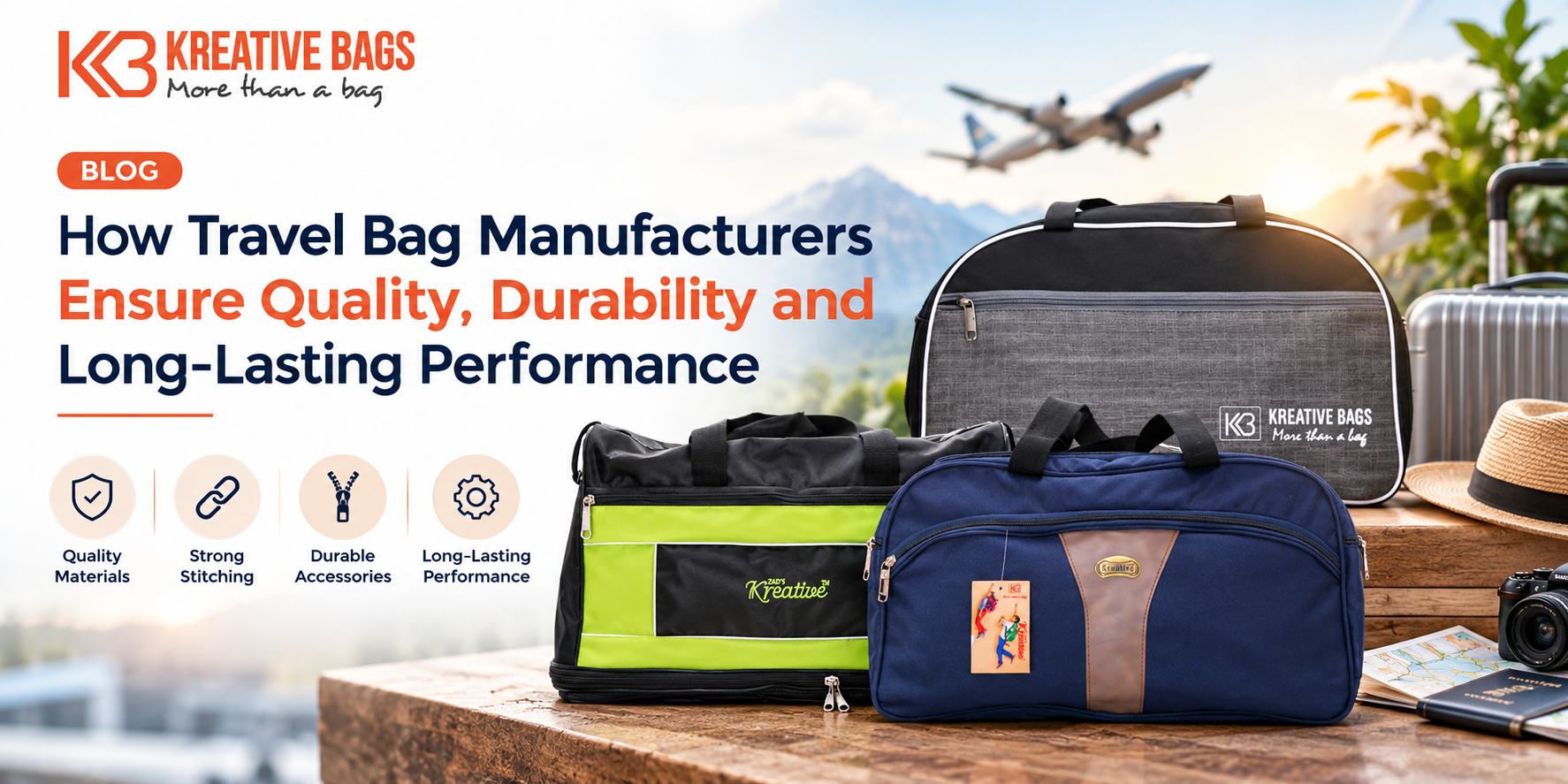
Travel bags are more than just accessories for carrying belongings. They are essential travel companions that help people organize, protect, and transport their belongings comfortably. Whether you’re planning a weekend getaway, a business trip, a family vacation, or an international adventure, choosing a durable and reliable travel bag can make a significant difference.
However, not all travel bags offer the same level of quality. The durability, functionality, and overall performance of a travel bag largely depend on the materials used, manufacturing techniques, product design, and quality control processes.
Professional travel bag manufacturers focus on creating bags that combine strength, comfort, functionality, and style. From selecting high-quality fabrics to inspecting finished products, every stage of manufacturing contributes to the overall performance and lifespan of a travel bag.
In this blog, we’ll explore how travel bag manufacturers ensure quality, durability, and long-lasting performance, along with the important factors buyers should consider when choosing travel bags.
Table of Contents
Toggle1. Selecting High-Quality Materials for Travel Bags
The foundation of a durable travel bag begins with the selection of appropriate materials. Experienced travel bag manufacturers carefully evaluate fabrics and components based on their strength, flexibility, weight, and resistance to everyday wear and tear.
Some commonly used materials include:
Polyester Fabric: Popular for its lightweight construction, versatility, and resistance to stretching and shrinking.
Nylon Fabric: Known for its strength, flexibility, and suitability for demanding travel applications.
Canvas Fabric: Offers a sturdy structure and a classic appearance for various travel bag designs.
PU-Coated Fabrics: Provide additional resistance to moisture and surface wear, depending on their construction.
Reinforced Synthetic Materials: Help improve durability in areas exposed to frequent handling.
Manufacturers also consider fabric thickness, abrasion resistance, and the intended application of each bag.
For example, a lightweight travel backpack may require different fabric characteristics than a heavy-duty duffel bag designed for frequent transportation.
Choosing suitable materials helps ensure that travel bags remain functional and visually appealing even after repeated use.
2. Strong Stitching and Reinforced Seams
Stitching quality is one of the most important factors determining the durability of a travel bag.
Even when premium materials are used, poorly stitched seams can lead to premature damage, particularly when bags carry heavy belongings.
Professional travel bag manufacturers use appropriate stitching techniques to improve structural strength and reliability.
Important stitching considerations include:
Reinforced stitching around handles and shoulder straps.
Double stitching in areas exposed to higher stress.
Strong thread suitable for the selected fabric.
Secure attachment of pockets and compartments.
Consistent seam construction throughout the bag.
Areas such as shoulder strap joints, handles, bottom panels, and zipper openings generally experience greater mechanical stress.
By reinforcing these areas, manufacturers can reduce the likelihood of seam failure and improve the bag’s ability to withstand regular handling.
Proper stitching also enhances the overall appearance and finishing of the product.
3. Using Durable Zippers, Buckles and Accessories
A travel bag’s durability depends not only on its fabric but also on the quality of its accessories.
Zippers, buckles, handles, straps, and adjustment mechanisms are frequently used components that significantly influence the user experience.
Reliable travel bag manufacturers carefully select accessories that complement the bag’s intended purpose.
Important components include:
Heavy-Duty Zippers: Well-constructed zippers provide smooth opening and closing while helping secure belongings.
Strong Buckles: Durable buckles help maintain reliable strap connections and adjustments.
Comfortable Handles: Properly designed handles distribute carrying pressure and support convenient transportation.
Adjustable Shoulder Straps: Strong adjustment mechanisms help users customize the fit according to their preferences.
Reinforced Bottom Panels: Additional protection at the base helps reduce damage caused by repeated contact with surfaces.
Manufacturers may evaluate these components through repeated-use testing and physical inspections.
High-quality accessories contribute to a smoother travel experience and help prevent common problems associated with low-quality bags.
4. Designing Travel Bags for Maximum Functionality
Durability alone does not make a travel bag suitable for everyday use. A well-designed bag must also provide comfort, convenience, and efficient storage.
Experienced travel bag manufacturers in India increasingly focus on combining practical functionality with modern design.
Important design features include:
Spacious main compartments for clothes and travel essentials.
Separate pockets for smaller accessories.
Easy-access zipper compartments.
Adjustable straps for comfortable carrying.
Lightweight construction for convenient transportation.
Practical dimensions for different travel requirements.
Manufacturers also consider how people use their bags in real-life situations.
For instance, business travellers may prefer organized compartments, while adventure travellers may prioritize flexible storage and comfortable carrying options.
A thoughtful design improves usability while helping distribute weight more effectively across the bag’s structure.
This combination of functionality and durability contributes to long-term customer satisfaction.
5. Quality Control Throughout the Manufacturing Process
Quality control plays a major role in ensuring that travel bags meet expected performance standards.
Rather than inspecting only finished products, established manufacturers often incorporate quality checks at multiple production stages.
Fabric Inspection
Before production begins, materials may be examined for visible defects, inconsistent texture, colour variation, and other quality concerns.
Cutting and Measurement
Accurate fabric cutting ensures that individual components match the intended product dimensions and design specifications.
Stitching Inspection
Manufacturers check seam alignment, stitching consistency, thread tension, and reinforcement at important connection points.
Accessory Inspection
Zippers, buckles, handles, and straps are checked for proper installation and functionality.
Final Product Inspection
Completed bags may undergo visual and functional checks to identify manufacturing defects before packaging.
These quality control procedures help maintain consistency across production batches, particularly when manufacturing travel bags in bulk.
For wholesalers, retailers, and corporate buyers, consistent product quality is essential for maintaining customer confidence.
6. Testing Travel Bags for Strength and Durability
Product testing helps manufacturers understand how travel bags may perform under different conditions.
Depending on the product category and manufacturing requirements, several tests may be used to evaluate durability.
Load-Bearing Tests
These tests assess how well a bag, its handles, and its straps perform when carrying a specified weight.
Zipper Functionality Tests
Repeated opening and closing can help evaluate zipper operation and identify potential weaknesses.
Strap Strength Tests
Shoulder straps and attachment points may be tested to assess their ability to withstand pulling forces.
Abrasion Resistance Tests
These tests evaluate how fabric surfaces respond to repeated rubbing and friction.
Water-Resistance Tests
Where applicable, manufacturers may assess how effectively selected materials resist moisture exposure.
Drop and Handling Tests
Controlled handling tests can help identify weaknesses in structural components.
Not every manufacturer performs every test, and testing requirements vary according to the type of bag.
However, appropriate product testing helps identify potential problems before products reach customers.
7. Ergonomic Design for Comfortable Travel
A travel bag should be comfortable to carry, especially during long journeys.
Manufacturers consider ergonomics when developing bags intended for frequent travel.
Important comfort-related features may include padded shoulder straps, balanced weight distribution, adjustable carrying systems, and suitable handle placement.
For travel backpacks, padded back panels can help improve carrying comfort.
For duffel bags, adjustable shoulder straps and comfortable hand grips can make transportation easier.
Manufacturers also consider the relationship between bag size, carrying capacity, and overall weight.
An excessively heavy bag may become uncomfortable even when it is structurally durable.
By balancing strength with comfort, manufacturers can create travel bags that support practical everyday use.
8. Precision Manufacturing and Skilled Workmanship
The expertise involved in manufacturing directly affects the quality of the finished travel bag.
Skilled workers play an important role in fabric cutting, stitching, assembly, finishing, and inspection.
Precision manufacturing helps ensure that different components fit together correctly.
For example, accurately aligned panels contribute to a balanced bag structure, while properly attached handles and straps improve reliability.
Manufacturers may use industrial sewing machines, specialized cutting equipment, and standardized production methods to maintain consistency.
Well-organized production processes also help minimize material waste and reduce avoidable manufacturing defects.
Combining skilled workmanship with suitable equipment allows manufacturers to produce travel bags with consistent construction and finishing.
9. Customization Without Compromising Quality
Customized travel bags are increasingly used for corporate gifting, promotional campaigns, educational institutions, and branded merchandise.
Businesses often require bags featuring specific colours, logos, materials, dimensions, or storage configurations.
Professional manufacturers must balance these customization requirements with the product’s structural integrity.
Common customization options include:
Company logo printing or embroidery.
Custom fabric colours and combinations.
Personalized compartments and pockets.
Branded zipper pullers and accessories.
Custom sizes and carrying configurations.
Packaging designed for corporate requirements.
When customizing travel bags, manufacturers should ensure that design modifications do not weaken important structural areas.
For example, additional compartments must be positioned carefully, while logo applications should suit the selected material.
This approach helps businesses receive attractive branded products that remain practical for regular use.
10. Maintaining Consistency in Bulk Travel Bag Manufacturing
Bulk manufacturing requires careful production planning and quality management.
When businesses order large quantities of travel bags, they expect consistent materials, dimensions, colours, stitching, and finishing.
Manufacturers can support this consistency through standardized specifications, approved product samples, production monitoring, and batch inspections.
Clear communication with buyers is equally important.
Before beginning production, manufacturers should confirm essential requirements such as bag dimensions, material selection, branding placement, quantities, and delivery expectations.
A well-defined manufacturing process reduces misunderstandings and helps ensure that completed products align with buyer requirements.
For companies purchasing bulk travel bags, choosing a manufacturer with reliable production practices can simplify procurement and support long-term business relationships.
11. How Customers Can Identify a High-Quality Travel Bag
Understanding manufacturing quality also helps customers make better purchasing decisions.
Before selecting a travel bag, buyers should examine several important features.
Check the Fabric: Look for suitable material strength, consistent texture, and appropriate construction for the intended application.
Inspect the Stitching: Pay attention to seams, handles, straps, and other high-stress areas.
Test the Zippers: Ensure that zippers operate smoothly without unnecessary resistance.
Evaluate Storage: Choose compartments and dimensions that match your travel requirements.
Examine Carrying Comfort: Consider handle design, shoulder strap adjustability, and the bag’s empty weight.
Understand the Manufacturer: Review product specifications, available customization options, and relevant quality information.
These simple considerations can help buyers select travel bags that offer better functionality and long-term value.
12. Why Choosing the Right Travel Bag Manufacturer Matters
A dependable travel bag manufacturer contributes much more than the physical production of bags.
The right manufacturing partner can help businesses choose suitable materials, develop practical designs, evaluate customization requirements, and maintain consistent product specifications.
For wholesalers and corporate buyers, these capabilities are especially valuable.
Reliable manufacturing can help reduce product complaints, improve customer satisfaction, and support repeat business.
Businesses should evaluate manufacturers based on product quality, communication, manufacturing capabilities, customization flexibility, and their ability to meet agreed requirements.
Rather than focusing exclusively on the lowest price, buyers should consider the overall value offered by the product.
A well-made travel bag can provide greater long-term satisfaction than a cheaper alternative that requires frequent replacement.
Conclusion
The quality and durability of travel bags depend on several interconnected factors, including material selection, reinforced stitching, reliable accessories, functional design, skilled workmanship, and effective quality control.
Professional travel bag manufacturers focus on these elements to create products that can withstand the demands of regular travel while offering convenience and comfort.
Whether you’re purchasing a single travel bag, sourcing products for retail, or planning a bulk corporate order, understanding the manufacturing process can help you make informed decisions.
Investing in well-designed, durable travel bags supports better functionality, customer satisfaction, and long-term value.
Looking for High-Quality Travel Bags? Choose Kreative Bags!
At Kreative Bags, we understand that every journey deserves a travel bag that combines functionality, style, and practicality.
Whether you’re looking for travel bags for personal use, wholesale requirements, corporate gifting, or customized branding, Kreative Bags is your destination for exploring bag manufacturing and customization solutions.
Our focus is on helping customers find travel bag solutions suited to their requirements, preferences, and intended applications.
Why Connect with Kreative Bags?
Explore travel bag options for different requirements.
Enquire about bulk travel bag orders.
Discuss customized bags for businesses and organizations.
Explore corporate branding and promotional bag requirements.
Connect directly for manufacturing and product enquiries.
Your Brand. Your Design. Your Travel Bag.
Planning to order travel bags in bulk or create customized travel bags with your company logo?
Partner with Kreative Bags and bring your travel bag requirements to life.
Get in touch with Kreative Bags today to discuss your bulk orders, customized travel bags, and corporate branding requirements!


