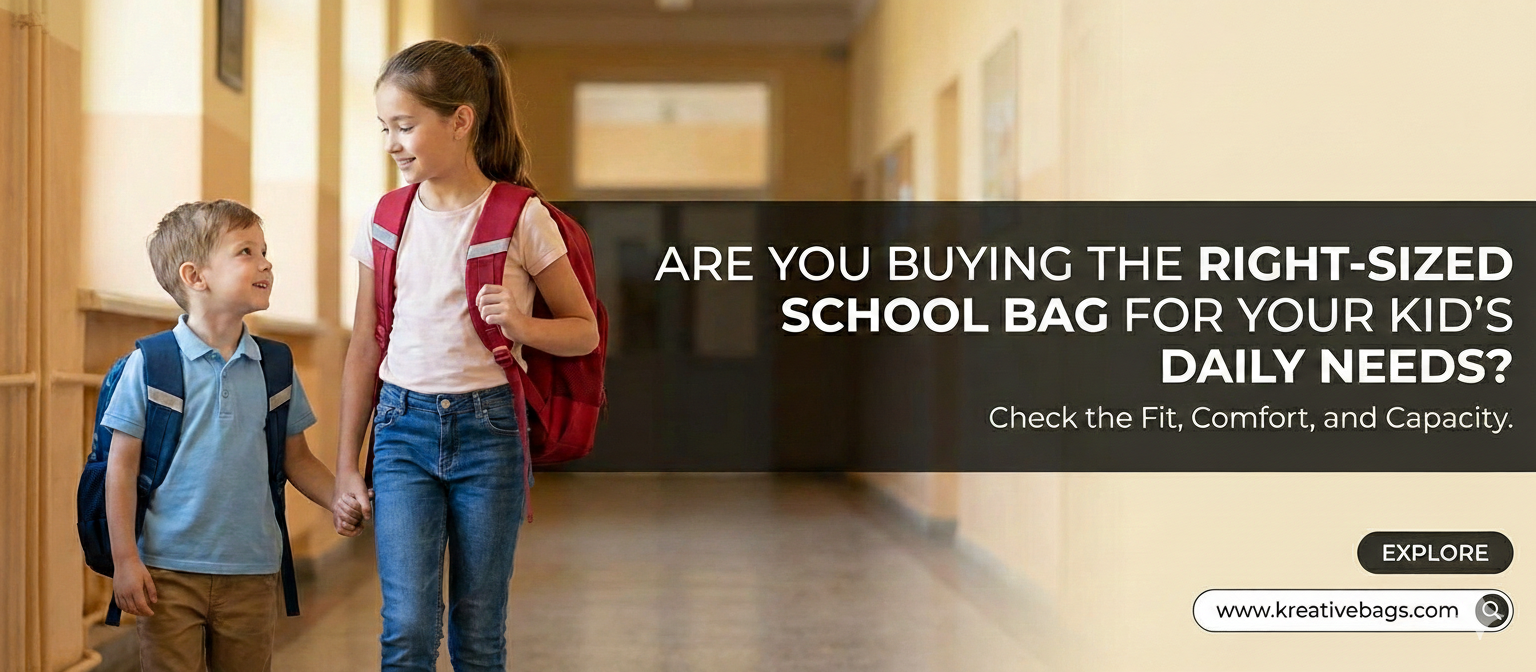
Have you ever noticed your child leaning forward while walking to school, struggling under the weight of an oversized bag? Or perhaps carrying a tiny backpack stuffed to the brim, with zippers barely closing? Choosing the Right-Sized School Bag is not just about looks — it directly impacts your child’s comfort, posture, health, and confidence.
Many parents focus on design, price, or brand first. But the real question is: Is the bag the right size for your child’s daily school routine? Let’s dive deep into how you can make the best choice.
Table of Contents
ToggleWhy Size Matters More Than You Think
A school bag is something your child carries almost every day for years. If it’s too big, it encourages overpacking. If it’s too small, it forces improper stuffing of books and supplies. In both cases, it creates unnecessary strain on your child’s back and shoulders.
A Right-Sized School Bag:
Distributes weight evenly
Prevents shoulder and neck pain
Maintains good posture
Allows proper organization
Boosts comfort and confidence
Children are still growing. Their spine, muscles, and posture are developing. Using the wrong bag size during these crucial years can contribute to long-term discomfort.
Signs Your Child’s School Bag Is the Wrong Size
Before buying a new one, check these warning signs:
1. The Bag Extends Below the Lower Back
A backpack should sit comfortably in the middle of the back. If it hangs below the waistline, it’s too large.
2. The Bag Is Wider Than the Child’s Torso
A Right-Sized School Bag should match your child’s body width. Oversized bags shift balance and increase strain.
3. Constant Complaints of Pain
If your child complains about shoulder, neck, or back pain, the size and weight distribution might be wrong.
4. Straps Digging Into Shoulders
Thin or overly tight straps often indicate improper fit or excessive size.
Understanding School Bag Size Categories
Not all school bags are created equal. Different age groups require different dimensions and capacities.
🎒 Preschool (Ages 3–5)
Light materials
Small capacity
Fits water bottle, snack box, small notebook
Height: Around 10–12 inches
A Right-Sized School Bag for preschoolers should never look bulky. It should sit snugly and feel light even when filled.
🎒 Primary School (Ages 6–10)
Medium capacity
Separate compartments for books and lunch
Height: 14–16 inches
Children at this stage carry textbooks daily. A properly structured, Right-Sized School Bag prevents imbalance.
🎒 Middle School (Ages 11–13)
Larger capacity
Laptop/tablet sleeve (if required)
Height: 16–18 inches
This is where many parents make the mistake of buying adult-sized bags. Stick to child-proportioned designs.
🎒 High School (Ages 14–17)
Functional compartments
Ergonomic support
Height: 18–20 inches
Even teenagers need a Right-Sized School Bag that supports their posture.
How to Measure for the Perfect Fit
You don’t need complicated tools. Just follow these simple steps:
Step 1: Measure Torso Length
Measure from the base of the neck to the waistline.
Step 2: Check Bag Height
The bag should not exceed torso length.
Step 3: Check Width
It should not extend beyond the shoulders.
Step 4: Weight Rule
The bag should not exceed 10–15% of your child’s body weight.
When you combine correct size and weight management, you ensure a truly Right-Sized School Bag experience.
The Health Impact of the Wrong Bag
Many pediatric experts warn that oversized or overloaded backpacks can lead to:
Poor posture
Spinal misalignment
Muscle fatigue
Chronic back pain
Headaches
When children lean forward to balance heavy loads, it strains their lower back. Over time, this posture becomes habitual.
A Right-Sized School Bag reduces the temptation to overpack and promotes natural posture.
Features That Support Proper Sizing
Size alone isn’t enough. Design matters too.
✔ Padded Shoulder Straps
Wide, cushioned straps distribute weight evenly.
✔ Adjustable Straps
Ensure the bag sits at the correct height.
✔ Multiple Compartments
Help organize weight properly.
✔ Padded Back Panel
Adds comfort and spinal support.
✔ Lightweight Material
Heavy materials add unnecessary extra weight.
When these features combine with proper dimensions, you get a truly ergonomic Right-Sized School Bag.
Common Mistakes Parents Make
❌ Buying “Future-Proof” Bigger Bags
Parents often buy larger bags thinking their child will “grow into it.” Unfortunately, this creates years of discomfort.
❌ Choosing Style Over Structure
Trendy bags without support compromise health.
❌ Ignoring School Requirements
Some schools require specific book sizes or laptop compartments. Make sure the bag matches daily needs.
❌ Overlooking Weight
Even the most stylish bag fails if it’s too heavy when empty.
Always prioritize function over fashion when selecting a Right-Sized School Bag.
How Organization Helps Reduce Strain
Proper organization inside the bag matters as much as external size.
Teach your child to:
Place heavier books closer to the back panel
Use all compartments wisely
Avoid carrying unnecessary items
Clean the bag weekly
A well-organized Right-Sized School Bag feels significantly lighter.
Seasonal Adjustments
Daily needs change throughout the year.
Winter: Extra space for sweaters
Exam season: More books and notebooks
Activity days: Sports gear
You may not need multiple bags, but choosing a slightly flexible yet still Right-Sized School Bag ensures adaptability.
Confidence and Emotional Comfort
Children are sensitive to how they look among peers. A bag that looks disproportionately large or small can affect confidence.
A well-fitted, stylish, and Right-Sized School Bag helps children feel:
Independent
Organized
Responsible
Confident
Comfort directly influences school enthusiasm.
When to Replace a School Bag
Replace the bag if:
It no longer fits your child’s height
Zippers constantly strain
Straps lose padding
Back panel flattens
Weight feels uneven
As children grow, their bag size must evolve too. A Right-Sized School Bag at age 6 won’t work at age 10.
Sustainable and Smart Buying
Instead of replacing bags frequently due to poor choices, invest in quality from the start.
Look for:
Durable stitching
Reinforced base
Breathable padding
High-quality zippers
A durable, Right-Sized School Bag saves money in the long run.
Practical Checklist Before Buying
Take this quick checklist with you:
☐ Does it match my child’s torso length?
☐ Does it sit above the waist?
☐ Are the straps padded and adjustable?
☐ Is it lightweight when empty?
☐ Does it meet daily storage needs?
☐ Does my child feel comfortable wearing it?
If you tick all these boxes, you’re choosing a Right-Sized School Bag wisely.
The Long-Term Benefits of Choosing Correctly
When you invest in the right size:
Your child avoids unnecessary physical strain
Daily school routine becomes easier
Books stay organized
Posture remains healthy
Confidence grows
A Right-Sized School Bag is not just a purchase — it’s an investment in your child’s health and development.
Final Thoughts
Buying a school bag might seem like a small decision, but its impact is significant. Instead of focusing only on prints, colors, or cartoon characters, prioritize fit, comfort, and ergonomic design.
Your child carries their bag almost every weekday — make sure it supports them, not burdens them.
A carefully chosen Right-Sized School Bag ensures your child walks into school comfortably, confidently, and safely every single day.
🎒 Choose Smart. Choose Comfort. Choose Kreative Bags.
If you’re looking for thoughtfully designed, ergonomic, durable, and stylish options, it’s time to explore Kreative Bags.
At Kreative Bags, we understand what growing children truly need — comfort, structure, durability, and modern designs. Our collection is crafted to ensure every child gets a perfectly Right-Sized School Bag that supports healthy posture and daily convenience.
Don’t compromise on your child’s comfort.
👉 Explore the latest collection from Kreative Bags today and give your child the confidence of carrying the perfect school companion every day!