As parents, schools, and businesses become more environmentally conscious, everyday purchasing decisions are beginning to change. From reusable bottles and lunch boxes to recycled stationery, sustainability is gradually becoming an important part of school life. One product that deserves equal attention is the humble school bag.
Kids carry their school bags almost every day. They need bags that are comfortable, durable, practical, attractive, and capable of handling books, stationery, lunch boxes, water bottles, and other school essentials. But today, there is another factor worth considering: what the bag is made from.
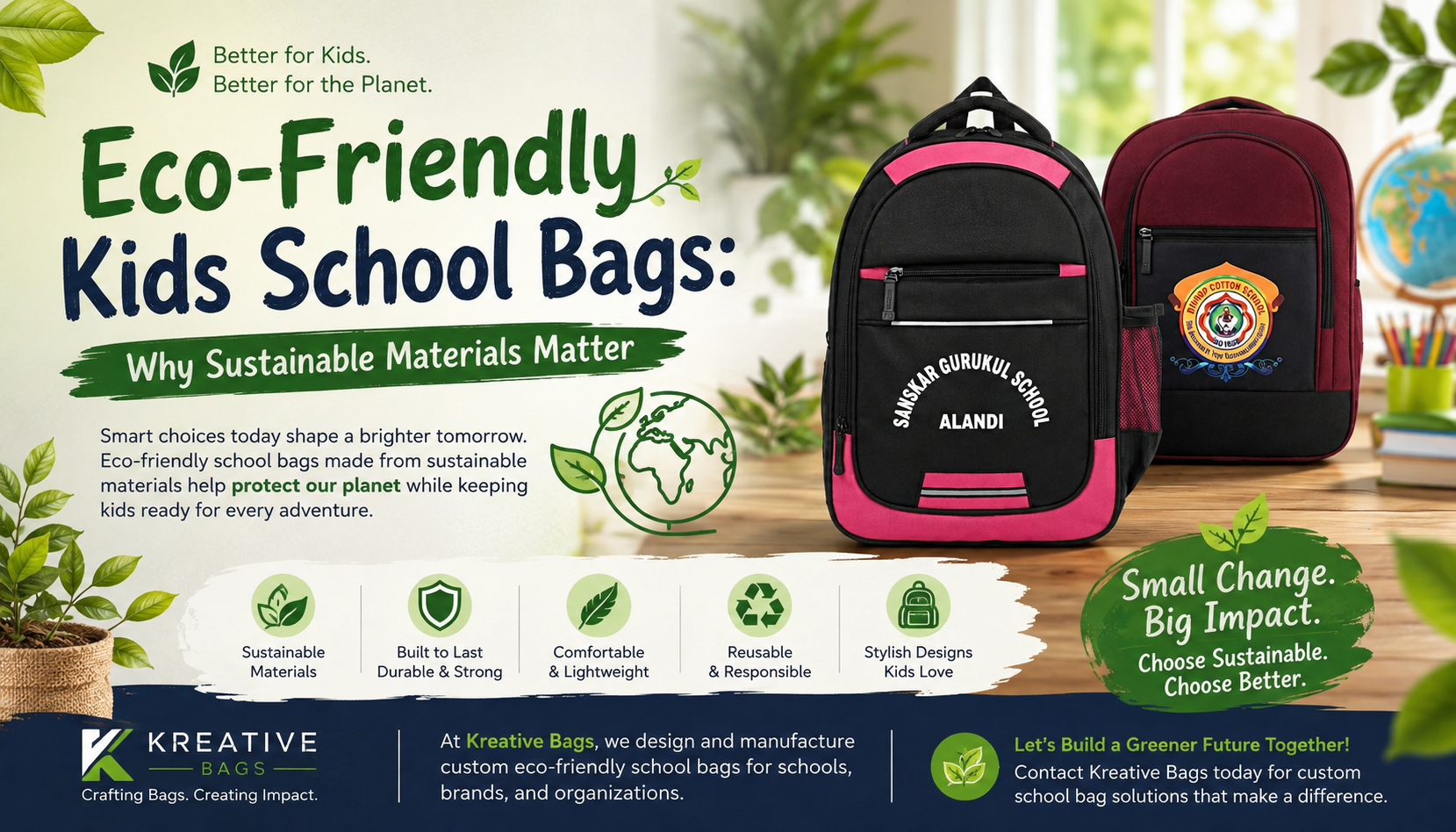
Eco-friendly kids school bags offer an opportunity to combine everyday functionality with more responsible material choices. By using sustainable, recycled, reusable, or responsibly sourced materials, manufacturers can create bags designed to meet children’s needs while reducing unnecessary dependence on conventional materials.
At Kreative Bags, we believe thoughtful bag design should consider not only appearance and functionality but also material selection and long-term usability. Let’s explore why sustainable materials matter and what parents, schools, retailers, and organizations should know when choosing eco-friendly school bags for kids.
Table of Contents
ToggleWhat Are Eco-Friendly Kids School Bags?
Eco-friendly kids school bags are bags designed and manufactured with greater consideration for their environmental impact.
Depending on the product and manufacturing process, these bags may use materials such as recycled fabrics, natural fibres, responsibly sourced materials, or fabrics selected for their durability and reusability.
Sustainability isn’t necessarily about one particular material. It involves looking at the complete life cycle of a bag, including its raw materials, manufacturing, durability, usability, and eventual disposal or recycling.
A well-designed school bag that lasts longer, for example, can help reduce the need for frequent replacements.
For children, however, sustainability cannot come at the expense of practicality. A school bag still needs to be comfortable, strong, easy to carry, appropriately sized, and visually appealing.
The goal is to bring these qualities together.
Why Do Sustainable Materials Matter for School Bags?
Millions of students use school bags year after year. When products are manufactured, replaced, and discarded at such a large scale, even relatively small improvements in materials and product lifespan can make a meaningful difference.
Choosing more sustainable materials can support efforts to reduce waste, encourage responsible consumption, and make better use of existing resources.
It can also introduce children to environmentally responsible choices from an early age.
A school bag may seem like a small purchase in the bigger picture, but sustainability is often built through everyday decisions. When families and schools start considering where products come from, how they are made, and how long they can be used, they contribute to a more conscious approach to consumption.
1. Sustainable Materials Can Help Reduce Reliance on Virgin Resources
Traditional manufacturing frequently depends on newly produced raw materials. Sustainable alternatives can help reduce this reliance by incorporating recycled or renewable resources where appropriate.
For instance, certain school bags can be manufactured using fabrics made partly or entirely from recycled materials. Instead of treating existing materials purely as waste, recycling processes can give them another useful application.
Natural materials can also be considered for suitable bag styles.
The important point is to select materials based on both sustainability and performance. A material that looks environmentally friendly but wears out quickly may not necessarily provide the best long-term solution.
That is why manufacturers must balance responsible sourcing with strength, durability, and everyday usability.
2. Durable School Bags Can Help Minimize Waste
Sustainability isn’t just about what goes into a school bag. It is also about how long that bag remains useful.
Children’s school bags face demanding everyday conditions. They are carried to school, placed on classroom floors, packed with books, taken on buses, exposed to changing weather, and opened and closed numerous times throughout the day.
A poorly constructed bag may need to be replaced quickly.
A durable bag, on the other hand, can potentially remain useful for much longer.
Features such as strong stitching, quality zippers, reinforced stress points, sturdy handles, and suitable fabrics can all contribute to the lifespan of a school bag.
Longer-lasting products can reduce replacement frequency and help families get more value from their purchases while supporting a less disposable approach to consumption.
3. Eco-Friendly Bags Can Encourage Environmental Awareness in Children
Children learn not only through textbooks but also through everyday habits.
Using reusable products, avoiding unnecessary waste, conserving water, and understanding recycling can all help build environmental awareness. An eco-friendly school bag can become another small part of that learning experience.
Parents can explain why recycled or responsibly sourced materials have been chosen and why taking good care of belongings matters.
Schools can also use sustainable merchandise or school bags as part of broader environmental initiatives.
This turns a practical everyday product into an opportunity to introduce conversations about responsible consumption.
When sustainability becomes familiar during childhood, environmentally conscious decisions can feel more natural later in life.
4. Recycled Materials Can Give Existing Resources a New Purpose
One of the most interesting developments in bag manufacturing is the increasing availability of recycled fabrics.
Depending on the required bag specifications, manufacturers may be able to use recycled textile materials or fabrics produced using recycled plastic-based resources.
The concept is straightforward: instead of relying exclusively on newly produced resources, suitable existing materials are processed and transformed into useful fibres or fabrics.
These fabrics can then be used for products such as backpacks and school bags.
For businesses, schools, and organizations seeking more environmentally conscious merchandise, recycled-material bags can also communicate a visible commitment to sustainability.
However, material claims should always be clear and accurate. Buyers should understand exactly what material is being used rather than relying solely on broad terms such as “green” or “eco-friendly.”
5. Natural Materials Offer Another Sustainable Option
Natural fibres are another area worth exploring when developing environmentally conscious bags.
Materials such as jute and cotton can be suitable for certain bag designs, accessories, promotional bags, and educational products.
Jute, in particular, is widely recognized as a natural fibre and can create a distinctive, earthy appearance. Cotton is versatile and can work well for lightweight bags and other reusable products.
However, not every material is suitable for every type of school bag.
A heavily loaded everyday backpack requires different performance characteristics from a lightweight activity bag or school event bag. Manufacturers therefore need to consider carrying capacity, structure, durability, comfort, weather exposure, and intended usage before recommending a particular material.
Sustainability works best when material choice and product purpose are considered together.
6. Comfort Should Remain a Priority
An eco-friendly bag still needs to work well for the child carrying it.
Comfort is particularly important because children may carry their bags for extended periods. Depending on the bag design and age group, useful features may include:
- Padded and adjustable shoulder straps
- Lightweight construction
- Comfortable back panels
- Age-appropriate dimensions
- Multiple compartments for better organization
- Convenient bottle pockets
- Strong and comfortable grab handles
The bag should also be appropriately sized for its intended user.
Choosing sustainable materials is valuable, but good school bag manufacturing requires a complete approach in which sustainability, comfort, functionality, durability, and design work together.
7. Sustainable School Bags Don’t Have to Look Boring
One common misconception about eco-friendly products is that they have to be plain or unattractive.
Modern bag manufacturing offers plenty of opportunities to combine sustainability with creative design.
Kids school bags can incorporate attractive colours, patterns, prints, practical compartments, interesting shapes, and age-appropriate visual themes.
For customized orders, businesses and institutions may also explore branding elements such as logos, messages, colour combinations, or custom design features depending on the chosen material and manufacturing requirements.
This is particularly useful for schools that want customized student bags or organizations planning educational campaigns around sustainability.
A thoughtfully designed eco-friendly school bag can be something children are genuinely excited to carry.
8. Sustainability Matters to Schools and Businesses Too
Eco-friendly school bags aren’t relevant only to individual families.
Schools, educational institutions, NGOs, retailers, corporate organizations, and promotional merchandise businesses can also consider sustainable bags for bulk requirements.
For example, customized bags can be developed for school students, educational programs, children’s events, awareness campaigns, giveaways, or community initiatives.
Organizations increasingly want their merchandise to reflect their environmental goals. Choosing reusable and responsibly designed products can help support that objective.
For businesses sourcing in bulk, working directly with an experienced bag manufacturer can also provide greater control over factors such as material, dimensions, compartments, branding, colour, and overall construction.
What Should You Look for When Choosing Eco-Friendly Kids School Bags?
The term “eco-friendly” alone should not be the only reason for choosing a bag. Parents and bulk buyers should consider the complete product.
Start by looking at the material composition. Find out whether the fabric is recycled, natural, reusable, responsibly sourced, or selected for another specific sustainability benefit.
Then consider durability.
Examine stitching, zippers, straps, handles, lining, and other high-stress areas. For children’s bags, comfort and weight are equally important.
Functionality should also match the child’s school routine. A useful school bag might need separate spaces for books, notebooks, stationery, lunch, and a water bottle.
Finally, consider whether the bag can realistically remain in use for a reasonable period.
A sustainable material combined with durable construction and practical design can provide a more balanced product.
Custom Eco-Friendly Kids School Bags for Schools and Brands
Customization can make sustainable school bags even more useful for institutions and businesses.
Schools may want bags featuring their logo, name, colours, or other identity elements. Businesses may require customized bags for campaigns, events, retail collections, or promotional programs.
Depending on the project requirements, customization may include bag dimensions, material selection, colour combinations, compartments, printing, logo placement, and other design details.
Working with a bag manufacturer allows buyers to discuss these specifications before production rather than simply selecting a generic ready-made design.
This can be particularly valuable for bulk orders where consistency, functionality, branding, and material choice all matter.
How Kreative Bags Approaches Better Bag Manufacturing
At Kreative Bags, we understand that a good bag needs to do more than look attractive.
Material choice, construction, usability, design, and durability all influence the finished product. For kids school bags, these considerations become particularly important because the products are intended for regular use by children.
We work with businesses, institutions, and organizations looking for bag solutions tailored to their specific requirements.
For buyers interested in more sustainable options, the process begins by understanding the intended application, preferred materials, design requirements, quantity, branding needs, and functionality.
Rather than treating sustainability simply as a marketing label, it should be considered alongside the practical performance expected from the finished bag.
Small Bags, Bigger Choices
Sustainability doesn’t always require dramatic changes. Sometimes, it begins with reconsidering products that are already part of everyday life.
School bags are a perfect example.
Choosing responsibly considered materials, prioritizing durability, reducing unnecessary replacement, and encouraging children to value and reuse their belongings can all contribute to more conscious consumption.
For parents, this means looking beyond colours and characters when choosing a school bag. For schools and businesses, it means considering how bulk purchasing decisions can align with wider sustainability objectives.
Most importantly, an eco-friendly kids school bag should still deliver what children need every day: comfort, durability, functionality, and a design they enjoy carrying.
Looking for Custom Eco-Friendly Kids School Bags? Talk to Kreative Bags
Planning to source eco-friendly kids school bags in bulk for your school, retail business, organization, promotional campaign, or brand?
Kreative Bags can help you explore customized bag solutions based on your material, size, design, branding, and functional requirements.
Whether you are looking for sustainable material options, customized school bags, branded backpacks, or bulk bag manufacturing, our team can work with you to develop a solution suited to your project.
Make your next bag order more thoughtful, practical, and memorable.
Contact Kreative Bags today to discuss your requirements and request a quote for custom kids school bags.